
The Hook Library A Practical System for Better Content Hooks
Hooks are not just different words you use at the start of a video. They are different types with different purposes. Understanding the difference between hook types and when to use each is what separates random posting from intentional content.
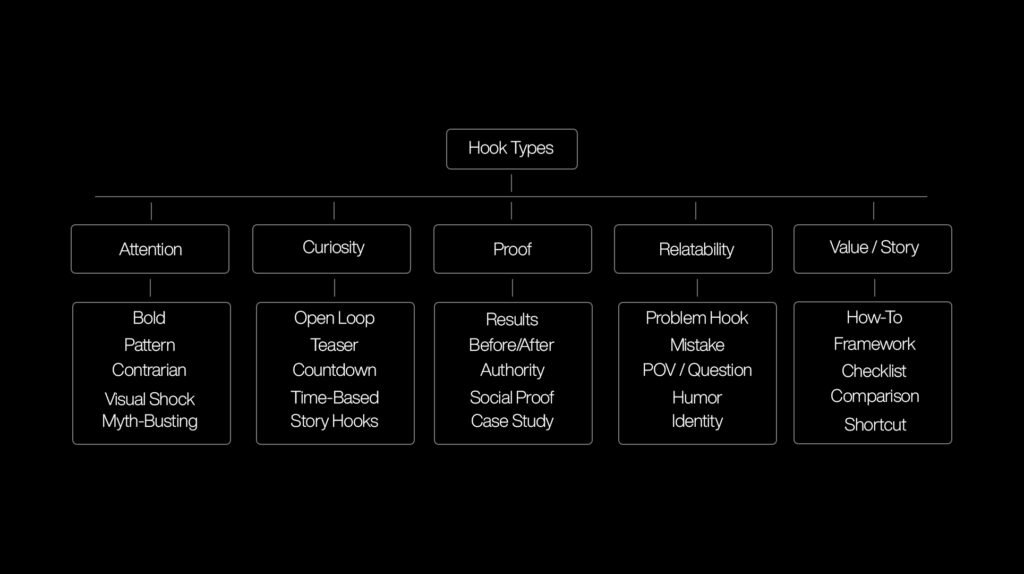
Attention Hooks — Stopping the Scroll
Attention hooks exist for one reason: to stop someone mid-scroll. These hooks work because they interrupt patterns, either visually or verbally, and force the brain to pause. They are most useful in fast feeds where viewers decide in one or two seconds whether to continue watching. Attention hooks are powerful, but risky, if what follows doesn’t connect, people leave just as fast.
Curiosity Hooks — Holding Watch Time
Curiosity hooks are designed to keep people watching, not just to get the click. They work by opening a loop in the viewer’s mind — a question, a hint, or an incomplete idea that feels uncomfortable to leave unanswered. These hooks perform best when the content delivers the payoff later, step by step. Used correctly, curiosity hooks increase retention; used poorly, they feel like clickbait.
Proof Hooks — Building Trust Fast
Proof hooks lead with evidence instead of opinions. They show results, data, transformations, or authority before asking for attention. This type of hook is especially effective when teaching, selling, or giving advice, because it reduces skepticism immediately. Proof hooks work best when the proof is clear, specific, and easy to understand within seconds.
Relatability Hooks — Making It Personal
Relatability hooks work because they make the viewer feel seen. They describe a common frustration, mistake, or everyday situation that the audience recognizes instantly. When people relate, they engage — they comment, share, and follow. These hooks are less about shock and more about connection, which makes them ideal for building community and long-term audience trust.
Story Hooks — Creating Emotional Connection
Story hooks pull viewers into a narrative by starting in the middle of an experience instead of the beginning. They rely on emotion, tension, or change to keep people watching. Story hooks are especially effective for personal brands, lessons learned, and transformation-based content. A good story hook promises resolution without revealing it too early.
Value Hooks — Promising a Clear Outcome
Value hooks work by clearly stating what the viewer will gain. Instead of being clever or mysterious, they are direct and practical. These hooks perform best when the content is educational and actionable, such as tutorials, frameworks, or step-by-step explanations. When done right, value hooks drive saves and shares because people want to come back to them.
Choosing the Right Hook Type
The best hook depends on the goal of the content. If the goal is visibility, attention hooks work best. If the goal is watch time, curiosity or story hooks are stronger. If the goal is trust or conversion, proof hooks are essential. Relatability hooks build engagement, while value hooks are ideal for educational content. Strong content often combines more than one hook type, but always starts with a clear primary goal.
Most people fail with hooks not because they use the wrong words, but because they use the same type repeatedly. Other common mistakes include using curiosity without payoff, leading with opinions without proof, or creating strong openings that don’t match the rest of the content. A hook should lead naturally into the video, not exist separately from it.